
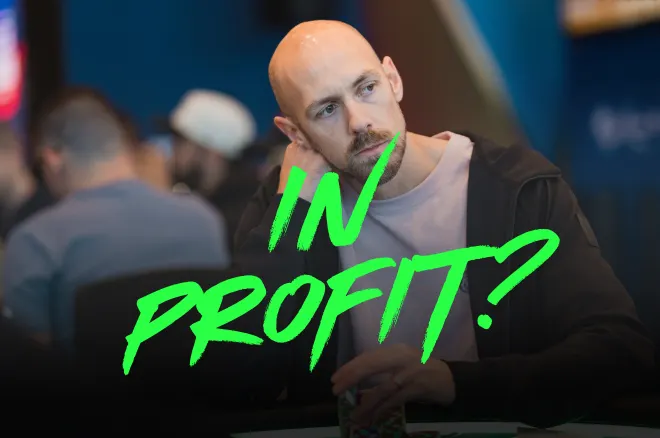
What does a high-stakes tournament crusher actually earn after all the dust settles?
That’s the question Stephen Chidwick—widely regarded as one of the strongest poker players of his generation—addressed during a recent Reddit AMA. The British superstar and Octopi Poker ambassador offered rare insight into the financial reality of life at the very top of the tournament poker ecosystem, where five- and six-figure buy-ins are the norm.
With more than $76 million in recorded live tournament cashes, Chidwick’s résumé places him firmly among poker’s elite. But as many seasoned pros will tell you, headline numbers don’t always reflect what actually ends up in a player’s pocket.
Last year, Daniel Negreanu famously described high-roller earnings as a “mirage,” suggesting that massive cash totals don’t necessarily equate to massive profits. Chidwick’s experience largely supports that idea—even though he has clearly won over the long run.
When asked how much of his $76 million in Hendon Mob cashes represents real profit, Chidwick estimated the figure to be somewhere between $5 million and $10 million. He also acknowledged that he doesn’t know the exact number.
Tournament poker comes with a long list of costs that never appear on public databases. Travel, taxes, total buy-ins, staking deals, and swapped action all significantly reduce gross winnings. Like most elite high rollers, Chidwick rarely plays entirely on his own money, meaning a meaningful portion of every score goes to backers or other players.
Because of those factors, many players with eight-figure career cashes are either break-even or losing once expenses are included. If someone as consistent as Chidwick has retained roughly 10% of his total cashes, it’s likely that many others have done far worse.
That context doesn’t diminish Chidwick’s achievements. He has won two World Series of Poker bracelets, captured 16 PokerGO Tour titles, and claimed three Triton Poker victories. He currently ranks second on the all-time live tournament money list, trailing only Bryn Kenney, who recently became the first player to surpass $80 million in recorded cashes.
Chidwick also used the AMA to reflect on how tournament poker has changed in the solver era. When asked which skill has become undervalued in modern MTTs, he pointed to fundamental hand-reading and intuitive range construction.
Rather than relying exclusively on solver outputs, Chidwick stressed the importance of understanding how opponents actually play and adjusting for factors simulations can’t fully capture. He even practices assigning specific hands to players while watching pots he isn’t involved in, checking his reads against real showdowns.
As for preparation, Chidwick keeps things simple: prioritizing sleep, getting exercise before playing, and reviewing notes before Day 2 sessions to form a clear strategic plan. Triton Poker events earned high praise for their overall experience, while PokerGO Tour stops at Aria were described as comfortable and enjoyable. The WSOP, however, didn’t receive the same level of enthusiasm.
Chidwick continues to close the gap on Kenney atop the Hendon Mob leaderboard and now trails by roughly $4 million. Whether or not he reaches the top spot, his candid comments offer a rare and sobering look at the true economics of elite tournament poker.